Being the Light—for Yourself and for Others
A Reminder from an Everyday Moment
There are seasons in life when being “the light” feels natural—when energy, clarity, and optimism come easily. And then there are seasons when simply showing up takes effort. Being the light isn’t about constant positivity or pretending things are okay. It’s about choosing presence, compassion, and intention—even in moments of uncertainty.
Before we can truly be the light for others, we have to learn how to be it for ourselves.
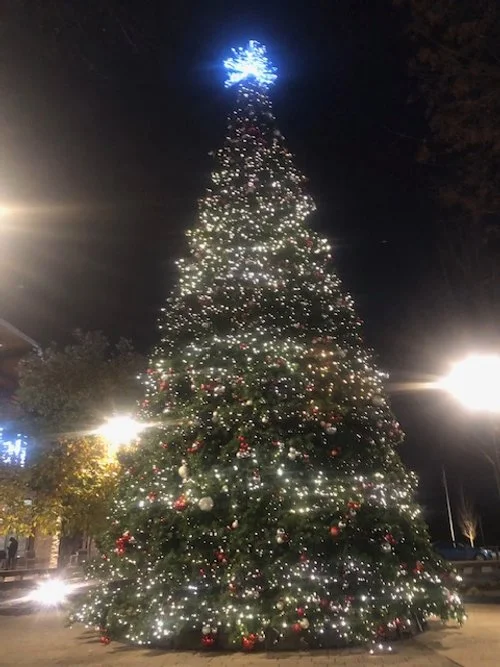
Recently, I was eating dinner outside at a shopping center near a large Christmas tree glowing with lights. As I sat there, I noticed a mom trying to take pictures of her two daughters in front of the tree. She kept stepping in and out of the frame, clearly wanting the moment captured—but not being in it herself.
I paused my meal and asked if she wanted to be in the picture too. She said yes, and her smile said everything.
A little later, I noticed a dad taking pictures of his daughter. I asked if he wanted a photo of the two of them together. At first, he seemed hesitant. Then I asked again in Spanish. “¿Quieres que les tome una foto?” He relaxed immediately and said, “Sí, gracias.”
As the evening went on, two more families passed by—each capturing moments where someone was missing from the picture. I offered again, and each time they said yes, smiled, and thanked me before continuing on their way. And each time, I returned to my dinner.
Nothing about this was elaborate. It didn’t cost money. It didn’t take much time. But it was a reminder that being the light often shows up in simple, everyday moments—when we’re present enough to notice and willing to step in with kindness.
Being the Light for Yourself
Being the light for yourself starts with self-trust and self-compassion. It’s allowing yourself to pause, notice what you need, and honor that without guilt. Sometimes that light looks like rest instead of productivity. Other times, it looks like setting boundaries, speaking up, or letting go of expectations that no longer serve you.
Being the light for yourself might include:
Offering yourself kindness after a mistake instead of criticism
Celebrating small wins instead of waiting for big milestones
Choosing clarity over self-judgment
Giving yourself permission to slow down
When you become a safe and supportive presence for yourself, you naturally create more capacity to show up for others.
Being the Light in Personal Relationships
In personal relationships, being the light is rooted in presence and authenticity. It’s listening without rushing to fix. It’s validating emotions while still honoring your own needs. It’s choosing curiosity over assumption and connection over control.
Being the light in relationships can look like:
Holding space for someone’s feelings without judgment
Communicating honestly and kindly, even when it’s uncomfortable
Practicing forgiveness, including self-forgiveness
Expressing appreciation through words, time, or simple gestures
Healthy relationships aren’t built on perfection—they’re built on emotional safety and mutual respect.
Being the Light at Work
In professional spaces, being the light doesn’t mean taking on everyone else’s stress or always being the one who holds everything together. It’s about showing up with steadiness, respect, and emotional awareness.
At work, being the light might look like:
Leading with empathy during challenging conversations
Offering recognition to a colleague who feels unseen
Staying grounded in high-pressure situations
Modeling healthy boundaries around time and expectations
These moments—small and consistent—help create environments where people feel supported, respected, and valued.
Light Across Cultures: Hope, Wishes, and Appreciation
Across cultures and traditions, light has long symbolized hope, resilience, and connection. Many holidays and celebrations use light as a reminder of renewal and possibility.
Diwali celebrates the victory of light over darkness and the strength of inner resilience.
Hanukkah honors perseverance and faith through the lighting of candles over eight nights.
Christmas uses lights to symbolize hope, love, and new beginnings.
Kwanzaa includes the kinara candles, representing values that guide community and purpose.
Birthdays often include candles and wishes—moments to reflect, hope, and express gratitude for life and growth.
These traditions remind us that light is not just something we see—it’s something we share. It represents appreciation for where we’ve been, hope for what’s ahead, and connection to one another.
Carrying the Light Forward
Being the light doesn’t require grand gestures or constant positivity. Sometimes it’s as simple as noticing, offering help, or choosing kindness—inward and outward.
When you care for yourself, you give others permission to do the same. When you show up with empathy and clarity, you create spaces where connection and growth can take root.
And sometimes, the most powerful light is the quiet kind—the one that says, I’m here. I see you. And this moment matters.
Do you want support to implement these strategies?
Not sure how to implement this or still feeling stress, be in touch. I am here to help you. Contact me to schedule a free consultation session.